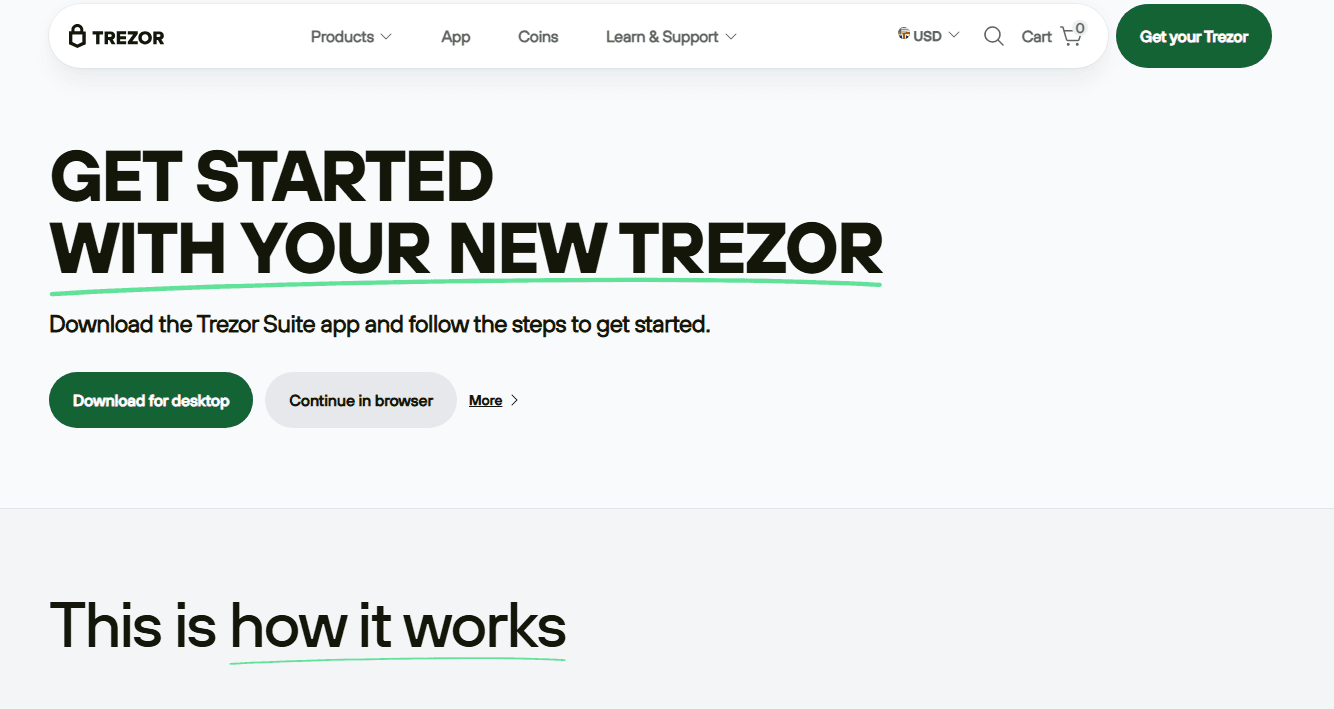
Trezor.io/start: Step-by-Step Guide to Setting Up Your Trezor Hardware Wallet
Securing digital assets is the cornerstone of cryptocurrency management. Unlike traditional banking systems, cryptocurrencies operate on decentralized networks where users are fully responsible for the safety of their funds. Losing access to your wallet or exposing private keys can result in permanent loss of assets. Trezor hardware wallets provide a highly secure method for managing cryptocurrency portfolios. Trezor.io/start is designed to guide users through the setup, configuration, and secure use of their Trezor device.
Whether you are a beginner or an experienced cryptocurrency user, Trezor.io/start offers step-by-step instructions for unboxing, initializing, and securing your Trezor wallet. The guide also explains how to integrate the device with Trezor Suite, Trezor’s companion application for portfolio management, ensuring that users can safely manage multiple accounts and assets.
Why Trezor.io/start Is Important
Starting with a hardware wallet requires careful attention to security. Trezor.io/start ensures that users follow a consistent, reliable process from unboxing to active usage. The platform focuses on:
Secure initialization of the device
Creating a PIN code and recovery seed
Integration with Trezor Suite for portfolio management
Understanding security best practices to prevent unauthorized access
By following Trezor.io/start, users minimize errors and gain confidence in managing their cryptocurrency safely.
Step 1: Unboxing and Inspecting Your Trezor Device
Before starting setup, carefully unbox your Trezor wallet. Trezor devices come in tamper-evident packaging. Inspect the package to ensure it has not been tampered with or damaged. A complete Trezor package should include:
The Trezor hardware wallet
USB cable for connection
Recovery seed card for recording backup words
Quick start guide or instruction manual
Do not use a device that appears damaged or has altered packaging. Trezor.io/start emphasizes verifying the device’s authenticity to ensure the security of your digital assets.
Step 2: Connecting Your Trezor Wallet
After confirming authenticity, connect your Trezor device to a trusted computer using the provided USB cable. When powered on, the device screen will display a welcome message, confirming that it is ready for setup. Trezor.io/start guides users through establishing a secure connection, reducing the risk of interference from compromised systems.
Step 3: Installing Trezor Suite
Trezor Suite is the official desktop and mobile application for managing cryptocurrency accounts. Before initializing the wallet, download and install Trezor Suite. Trezor.io/start provides guidance on installation and verifying the official application to maintain maximum security.
Trezor Suite allows users to manage multiple cryptocurrency accounts, monitor balances, review transaction history, and execute secure transactions. Integrating your Trezor device with Trezor Suite is essential for a seamless and secure portfolio management experience.
Step 4: Initializing the Trezor Device
Once Trezor Suite is installed, begin initializing your Trezor wallet. Initialization includes setting a secure PIN code and generating a recovery seed.
Setting a PIN Code
The PIN code protects your device from unauthorized access. Choose a unique and secure code, avoiding predictable combinations. Trezor devices allow flexible PIN lengths to balance security and convenience.
Generating a Recovery Seed
The device generates a 12 to 24-word recovery seed during setup. This phrase acts as the ultimate backup, allowing you to restore your wallet in case the device is lost, stolen, or damaged. Trezor.io/start emphasizes writing the recovery seed accurately on the provided card and storing it offline in a secure location. Never share your recovery seed or enter it into online forms, as possession of this seed grants complete access to your cryptocurrency assets.
Step 5: Verifying the Recovery Seed
After recording your recovery seed, the device will prompt you to verify it. This step ensures that you have correctly documented the seed. Verification is critical because an incorrect or incomplete seed could permanently lock you out of your wallet. Trezor.io/start provides detailed instructions to complete this step safely.
Step 6: Adding Cryptocurrency Accounts in Trezor Suite
With your Trezor device initialized, you can add cryptocurrency accounts within Trezor Suite. Trezor.io/start guides users through selecting supported cryptocurrencies and creating accounts for each asset. All transactions are signed securely on the Trezor device, ensuring that private keys never leave the wallet.
Trezor Suite allows users to manage multiple accounts for different cryptocurrencies within a single interface. This structure simplifies portfolio management while maintaining the highest level of security.
Step 7: Sending and Receiving Cryptocurrencies
Once accounts are added, Trezor.io/start explains how to safely send and receive cryptocurrencies. Every transaction requires physical confirmation on the Trezor device, preventing unauthorized transfers. Users can verify transaction details, including recipient addresses and amounts, on the device screen before confirming.
This step reinforces the principle of self-custody, as login access alone cannot authorize transactions without user approval on the hardware wallet.
Step 8: Updating Firmware Regularly
Trezor devices require firmware updates to maintain security and compatibility with Trezor Suite. Trezor.io/start provides guidance on checking for updates and installing them safely. Regular updates protect the device from potential vulnerabilities and ensure compatibility with newly supported cryptocurrencies.
Security Best Practices
Trezor.io/start emphasizes key practices to maintain the highest security:
Always use the official Trezor Suite application
Never share your recovery seed or PIN
Keep the device disconnected when not in use
Store the recovery seed offline in a secure location
Update firmware regularly
Following these guidelines minimizes risks from phishing, malware, and unauthorized access.
Trezor.io/start for Beginners and Experienced Users
Trezor.io/start is suitable for all levels of users. Beginners benefit from clear, step-by-step instructions that prevent setup errors and ensure secure initialization. Experienced users can use the guide as a reference for firmware updates, device features, and security reminders. The structured approach ensures the hardware wallet is fully operational, secure, and ready for long-term use.
The Role of Trezor.io/start in Long-Term Security
Trezor.io/start is more than a setup guide—it is a roadmap for long-term cryptocurrency security. From device unboxing to transaction confirmation, every step reinforces best practices in asset protection. By following this guide, users establish a strong foundation for safely managing cryptocurrency portfolios over time.
Conclusion
Trezor.io/start provides a comprehensive, step-by-step process for safely setting up and using a Trezor hardware wallet. Following the guide ensures users can:
Unbox and verify the device’s authenticity
Initialize the wallet with a secure PIN and recovery seed
Integrate the device with Trezor Suite
Add cryptocurrency accounts and manage multiple assets securely
Send and receive cryptocurrencies with on-device verification
Maintain device security with firmware updates and best practices
Whether you are new to cryptocurrencies or an experienced investor, Trezor.io/start is essential for building confidence in self-custody and long-term asset protection. By following the guide, users can securely manage their digital assets, protect their recovery seeds, and execute transactions with peace of mind.
Starting your cryptocurrency journey with Trezor.io/start ensures a safe, structured, and secure approach to digital asset management, empowering users with full control and security over their investments.